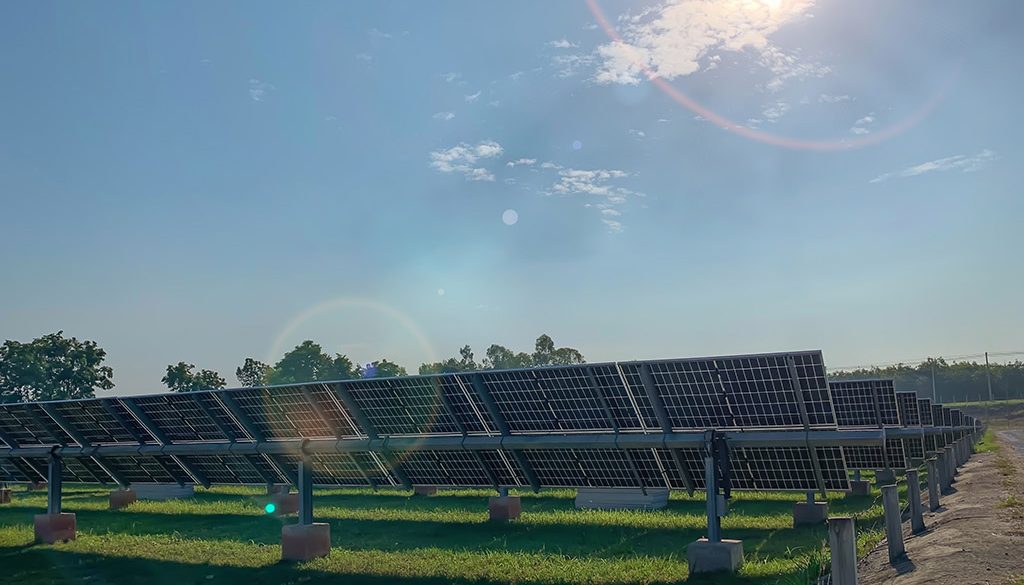
How Does Galvanized Steel Help with Solar Energy?
Updated: April 2026
Solar power continues to be a popular choice for residential and commercial purposes not only because it is clean and renewable, but also because it can be used to bring power to things very quickly.
While the solar panels themselves do all the work, they still need to be mounted and supported by other materials that do not detract from their benefits.
Galvanized steel is a popular material used in solar energy products including solar control boxes, solar racking, and solar-panel supports. Hot-dipped galvanizing in particular is perfect for renewable energy sources because it’s a sustainable material that has provided corrosion protection to structures for the power generation industry for years.
But, there are a few other reasons galvanized steel is a good partner for solar energy that goes beyond its lack of negative environmental impact.
At South Atlantic, we’ve established a reputation as a reliable, quality vendor that has what you need, when you need it. With 2,000+ tons of galvanized steel ready to ship, we can provide peace of mind knowing that you won’t be faced with the stress of missing an important milestone or deadline. We invite you to see why we’ve been trusted by national brands for more than 30 years. Just contact us for a quote.
In this article, we’ll explore the benefits of galvanized steel and why this is an excellent choice for solar energy projects.
Corrosion Resistance Means Cleaner Installation Sites
Galvanized steel is resistant to corrosion. This means that it can withstand the elements longer without staining and while maintaining its original strength. This is important for a few reasons. Most importantly, this keeps the installation site looking clean and professional. No one wants to install solar panels with rusted materials and components.
Why do hot-dipped galvanized materials hold up better? The galvanization process coats the steel in a layer of zinc, providing a natural and renewable energy source that’s durable.
This zinc oxide layer protects the steel from corrosion, which means it will also protect the solar panels and other equipment it may be mounted on or with. Considering that solar panels themselves can be expensive, the extra rust resistance of the galvanized materials will do a better job of protecting your investment.
Greater Durability Means Your Solar Energy Panels Will Last
Most renewable energy applications, like solar energy panels, are installed in locations that get extreme exposure to the elements. The zinc used in hot-dip galvanized solar panel materials is resistant to the harmful UV rays that may beat down on the roof of a home or business, or in a large solar field selected specifically because of the direct sunlight.
Either way, it is important that the materials used can withstand exposure to the elements without breaking them down. This is especially the case for solar energy panels or products used in regions susceptible to hurricanes, hail, or other weather-related threats.
Galvanized steel is very durable. It is the first choice for builders facing extreme elements, including freezing temperatures and corrosive seawater. It can maintain its strength and its gray-silver appearance through years of exposure to these environments.
This makes it an ideal choice for outdoor applications and a great material to pair with solar energy products.
Proof of this can also be seen in the instances where galvanized steel materials have been used to build monuments or outdoor tributes. Making sure these monuments held up over the years was of great importance. Galvanized steel was chosen and has held up over the decades.
Galvanized Steel’s Good Heat Conduction Means Optimized Performance
Galvanized steel is also a good conductor of heat. While raw steel is not considered a better heat conductor, treated steels like stainless and galvanized steel are some of the best metals to help heat travel.
When the heat is able to travel through the surrounding mounting materials easily, solar panels can operate at peak efficiency. This is because the heat generated by the sun’s rays can be transferred quickly and evenly through the galvanized steel, making sure that it does not build up in any one spot and cause problems.
It can also send even more heat to the panels than they might otherwise receive from materials that did not allow the heat to travel from them to the panel.
Need Galvanized Steel for Your Solar Project? Call South Atlantic Today!
If you are working on a project that incorporates solar energy and needs materials that will stand the test of time, we have the resources you need.
Whether you have fabricated steel that needs to be galvanized or you need galvanized materials that are ready to go now for your current project, we’ve got you covered! Give us a call today to learn more about our hot-dip galvanizing services at (910) 332-1900.
But galvanized products provide much more than reliability. Are you fully aware of how “green” and sustainable they are? Keep reading to learn more.
5 Ways Galvanizing’s Environmental Impact is Green
Prioritizing sustainable practices in all areas of industry is becoming everyone’s top priority. It is crucial to preserving our planet for future generations. It is also an essential part of making sure materials remain available.
Galvanizing is one process with a low environmental impact that offers long-lasting protection for steel. In fact, sustainability has always been part of the DNA of galvanized materials.
The American Galvanizing Association states, “Sustainability is intrinsic to hot-dip galvanized steel and is a message the galvanizing industry promoted long before sustainable design became a trend.”
5 Ways Galvanizing’s Environmental Impact is Green
1. Galvanizing Lasts Longer, Requiring Fewer Materials to Achieve the Same Results
One of the reasons hot-dip galvanizing has become the method of choice for coating and protecting steel is its longevity. Galvanized coatings can last for decades. This means the original materials do not need constant repairs or replacements every couple of years.
A longer lifespan means more raw materials that remain available for future projects. This helps to lower galvanizing’s environmental impact.
2. Fewer Materials AND Fewer Factory Emissions
The long lifespan of galvanized materials benefits the environment in more ways than one! Forbes reports that the majority of energy used in the iron and steel industry sectors is used to produce crude steel. When crude steel is hot-dip galvanized and lasts longer, less of it needs to be produced.
Less need for new materials means less factory power to maintain existing infrastructures over time.
Additionally, galvanizing requires less electricity and gas to heat the steel during the coating process. So, galvanizing reduces the amount of manufacturing emissions in multiple ways, keeping galvanizing’s environmental impact low.
3. Hot-Dip Galvanizing Uses Natural Compounds
The hot-dip galvanizing process uses zinc, an abundant and natural element, to coat and protect steel. When compared to its alternatives, like epoxy or paint, this is much better for the environment.
Epoxy is a type of plastic coating. Plastic pollutes the environment and can take hundreds of years to decompose.
Paint is often toxic or fails to effectively protect steel from the elements, meaning more materials will be necessary to reinforce the structure when the painted steel corrodes.
Galvanized steel is solely composed of elements that are already present in the soil. This means that there are no harmful chemicals or compounds used in the process or being added into the environment. This further decreases galvanizing’s environmental impact.
4. The HDG Process Creates Less Waste, and the Materials Are Recyclable
Another way hot dip galvanizing is environmentally friendly is that the process creates very little waste. Any zinc that does not adhere to the steel during the coating process can be collected and reused. This is because it is contained within vats that melt it down for use. Zinc that flakes or falls off can easily be thrown back into the hot baths and melted down again.
Galvanized steel can also be recycled at the end of its lifespan or used without losing any of its protective properties. This makes it very sustainable because existing galvanized materials can be broken down to help create new ones.
5. Galvanized Steel Makes Other Environmentally Friendly Practices Easier to Put in Place
Galvanized steel has become an essential part of the structures of green power solutions. Solar panels use galvanized steel in their frames, and wind turbines use galvanized steel in their towers. Galvanizing these materials helps to extend their lifespan.
It also makes them more resistant to corrosion. This can help reduce the environmental impact of these practices.
Galvanizing: Good for Infrastructure and the Environment
Galvanizing is an environmentally friendly process that benefits both consumers and manufacturers. The decreased need for production, lower emissions, and recyclability of galvanized steel help to make it a sustainable choice. This makes it even more appealing for those looking to protect our planet while maintaining their project standards.
Need Galvanized Materials for Your Next Project?
If you are ready to deliver a project that will stand the test of time while respecting the environment, South Atlantic has the materials you need. In addition to our own inventory of standard galvanized building materials; we also offer galvanizing services to coat your steel. Contact us today to speak to one of our experienced team members, who can help you find the best options and prices for your project.
How To Meet The Tough Grounding Requirements For Solar Panels
A project involving solar panels should not be taken lightly.
In fact, it’s a very demanding venture.
When it comes to grounding requirements for solar panels, you must meet the stringent guidelines that are central to your project. Failure to secure a solar panel grounding system not only creates potential safety issues, but can result in additional expense, penalties and rework.
The grounding requirements for solar panels are vital to prevent fires and electrical shocks, but they also reduce interference, ensuring reliable operation.
We’ll take a closer look at some of the grounding products you’ll need for solar panels, as well as the strict requirements outlined to ensure proper use. In addition, you’ll see how Southern Grounding (a business unit of South Atlantic) meets these criteria to provide the materials you need with the excellent customer service you deserve.
Next, let’s take a look at some of these regulations and explore how the right grounding equipment makes all the difference.
The Stringent Grounding Requirements for Solar Panels
There are several key grounding codes and standards you should consider when undertaking any solar panel project. We’ll review a few of them below:
What Code Requirements Must Be Followed When Grounding Solar Panels?
The National Electric Code (NEC 690 for solar photovoltaic systems)
First, we encourage you to closely review the details of the National Electric Code and stay informed of any changes that have been implemented.
Some important elements of these guidelines include:
- All equipment must be certified to ensure safety standards are met.
- The equipment is installed only by licensed electricians with specialized training.
- There has to be a way to disconnect the solar system from the power grid.
- All components should be clearly labeled.
- There must be a rapid shutdown feature in case of an emergency.
Local Codes and Regulations
You should always check with your region and local area to ensure you’re following all the codes and the right regulations.
International Standards
You should also be familiar with the regulations set by the International Electrotechnical Commission (IEC). They have created comprehensive guidelines to assist you in the process and ensure safety.
We encourage you to look at all these regulations and study the details carefully.
Remember, always consult a certified professional to help you with installation.
Grounding Is an Indispensable Part of Your Solar Panel Project
Lightning and electrical faults can spell disaster for solar panels if they are not properly grounded. Through grounding, a pathway is provided for the electrical current, dissipating it into the earth. Doing so ensures safety and prevents equipment damage.
However, grounding is not without its challenges. We’ll look at a few areas where having the right skills and expertise are vital.
Solar Panel Systems: Grounding Challenges
Rooftop Systems
Accessibility is one of the main issues, in addition to factoring in wind and water exposure. It’s also crucial to make a sturdy installation while, at the same time, avoiding any damage to the roof.
Ground-Mounted Solar Arrays
Depending upon the moisture level of the soil, careful attention should be given to the quality of the material. Our galvanized and copper-clad grounding rods are known to maintain their integrity even in harsh conditions.
Electrical Panels
The National Electric Code must be followed closely, in addition to any additional requirements by local codes. Proper grounding of inverters is necessary to prevent equipment damage and electric shock.
Avoid These Common Solar Grounding Requirement Mistakes

Meeting These Requirements Starts With the Right Products
With Southern Grounding, you can rest assured that all our grounding products meet these standards, including the National Electric Code and any other international requirements.
In addition, our items are stocked and ready to ship. Not sure about the technical specifications? Don’t worry. We have the resources you need and the knowledgeable employees to assist you.
What Grounding Products Are Required to Ground Solar Panels?
To ensure you meet grounding requirements for solar panels, you should select the right components. This includes:
- The grounding electrode system: This includes grounding rods for solar panels and metal water pipes.
- Grounding conductors: These are copper wires that carefully connect your solar panels to the electrode that will ground them.
- Connectors and clamps: You’ll need these to attach to the frame of the solar panel.
Looking for the solar panel grounding system materials you need? Southern Grounding has you covered with components that exceed standards. See why we’ve been trusted by large national companies for over 50 years.
Southern Grounding Quality Has You Covered for Essential Protection in Critical Environments
You don’t cut corners with your projects, and neither do we. With extensive inventory and nationwide shipping, we have the grounding materials you need, when you need them.
No matter the size or scope of your project, our UL-certified and NEC-qualified products meet or exceed the tough grounding requirements for solar panels.
It’s simple to get started, simply request a quote today to discover how we’ve got you covered.
5 Ways to Prevent Rust on Solar Mounting Systems With Galvanizing
Solar panels are a sleek solution for homes and businesses that want to use a green source of energy. But, rust on solar mounting systems can quickly ruin their appearance and hurt their lifespan.
Solar panel systems only have a few parts. These include the panels themselves, their mounts, and their electrical components. The electrical components can only convert and direct energy if the panels are working as intended.
When the panels are not in good condition, then they are not able to absorb enough sun to fuel the power system.
Rust is one of the main threats to both the functionality and appearance of solar panel systems. Preventing solar panel rust should be the first priority when choosing the style and make-up of the system’s components.
Galvanized steel continues to outperform the other solar panel material options on the market. Its unique self-healing qualities make it resilient in harsh conditions.
There are five ways you can use galvanizing to keep your solar mounting systems rust-free. To understand them, you need to know a little more about both rust and galvanizing first.
Understanding Rust and Its Impact
Rust is a muddy reddish-brown substance that results from the corrosion of iron. When an iron object stays wet while out in the open air, the oxygen and iron react. This reaction is called oxidation. As the oxidation happens, the iron weakens and the corroded material turns into rust.
The threat of oxygen corroding wet iron is why rusty solar mounting systems can be a real problem. Because the panels are outside, their mounts are exposed to the elements, absorbing rain, melting snow, and even humidity.
This makes them a prime candidate for rusting. Rust is a sign of weakened metal. If your solar panel mounts are rusting, they are becoming weaker. This can threaten the safety and usability of the panels.
As the mounts weaken, the positioning of the panels can become shifty. Their resilience in wind and storms can also decrease. This can lead to more frequent repairs and system issues.
The Role of Galvanizing in Corrosion Protection
One of the best ways to prevent rust on solar mounting systems is to make sure their materials have built-in protection against the elements. This is where galvanizing comes in to save the day.
Hot-dip galvanizing is a process by which raw steel is cleaned then immersed in molten zinc. Once the zinc cools from the 850 degrees it reaches during the galvanizing process, the metallic bond of zinc and steel is harder than the original steel.
To explain why galvanizing is the perfect choice for solar panels, it’s important to look at what factors cause solar panels to corrode.
The two main elements that can wear down solar panel systems are heat and moisture. Extreme heat from sun and UV light can mar weaker metals. At the same time, moisture can corrode bare metals or those with fragile coatings.
Galvanized materials have two unique properties that help them withstand corrosion: barrier protection and sacrificial protection.
Once steel goes through the galvanizing process, the resulting material is stronger because of the chemical bond between the zinc and iron. This forms a barrier that is very resistant to scratching and damage.
Should anything damage the outside coating, the zinc will allow itself to corrode instead of the steel. The corroded zinc materials then serve to reseal the coating. These protections ensure the integrity of any project that uses galvanized materials, including solar panel mounts.
The Galvanizing Process
So, how does galvanizing turn steel into a superpower building material, one of the best for solar panel corrosion protection? It takes three steps: preparing the surface, hot-dip galvanizing the steel, then allowing it to cool before completing the final inspection.
To prepare the steel, parts are dipped in a caustic cleaner to remove light oil, dirt, and grime. The parts are then dipped in acid to remove rust and mill scale. This leaves the steel clean and receptive to creating the metallurgical bond between the steel and zinc.
The treated steel is then immersed in a vat of molten zinc. This is what the “hot-dip” in the name of the material means. Finally, it is set aside to allow the new zinc coating to cool and harden. Once dry, the materials are inspected to make sure the coating is thick enough and without issue.
It is important to work with a company that follows the highest industry standards through every step of the galvanizing process. Skipping or rushing through the galvanizing process can result in subpar materials. To read more about how to choose a good company from the galvanized steel suppliers for solar panel materials in your area, check out this post.
Choosing the Right Galvanizing for Solar Mounting Systems
Now, you understand what factors cause solar panels to corrode and why galvanized materials are the best at preventing solar panel rust. It’s time to look at what types of materials are best for solar panel mounting systems.
In general, solar panels are mounted either on the ground or on a roof. For the ground mounting systems, you need anchors, mounting poles, the base of the systems, and the brackets to attach the solar panels themselves.
For the rooftop systems, a combination of rails, clamps, and hooks forms the base of the mounting system. It also uses brackets to attach the panels themselves, and can include flashings, which help keep water from collecting between the roof and the mounting system.
For many of these parts, you can choose between aluminum and steel. But as we’ve explained so far, weaker materials like aluminum are going to wear down faster and hurt the lifespan of the entire solar panel system. For superior solar panel corrosion protection, galvanized materials are the best choice wherever possible.
The best sizes and weights to choose when assembling your solar mounting systems will depend on what type of set up you’re installing.
Will your panels be in a difficult environment, like one with regular snowfall, intense periods of UV light, or saltwater in the air?
How much do the panels need to be able to pivot throughout the day?
How large and heavy are the panels the solar mounting systems need to hold?
Understanding all of these things will help you choose materials that will prevent rust on solar mounting systems.
Maintenance Tips for Galvanized Solar Mounting Systems

The final way it prevents solar panel mount corrosion is by being practically maintenance-free! While it is a good idea to inspect the mounts and panels after storms or intense weather seasons for any cracks or signs of obvious wear, damage to the galvanized materials is unlikely. When it does occur, it is best to call the manufacturer so you can repair them in a way that preserves their overall integrity.
Looking for Galvanized Steel Suppliers for Solar Parts? Look No Further Than South Atlantic
The safety of your solar panels depends on the quality of their mounting systems. That is why you want to use the best galvanized steel on the market. At South Atlantic, we’ve built our 50-year reputation on producing superior hot-dip galvanized materials perfect for any project.
From a strict adherence to ASTM standards to an industry-leading 25-point QA process, we do not ship materials that are anything less than perfect.
When your materials are ready to go, we oversee the entire journey, whether you are down the road or across the country. This way, you can count on your galvanized materials arriving without damage or delay.
Request a custom quote for your next solar project today and experience how smooth and easy the process can be.
Key Takeaways:
- Galvanized steel is an ideal material for solar energy projects due to its corrosion resistance, durability, and heat conductivity.
- The zinc coating in hot-dip galvanized steel provides both barrier protection and self-healing “sacrificial protection” against rust and corrosion.
- Galvanizing is an environmentally sustainable process because it uses natural compounds, produces little waste, and the materials are fully recyclable.
- Hot-dip galvanized coatings can last for decades, reducing the need for frequent repairs or replacements and lowering overall material consumption.
- Because galvanized steel lasts longer, it reduces factory emissions by decreasing the demand for new crude steel production.
- Galvanized steel is composed solely of elements already present in the soil, meaning no harmful chemicals are introduced into the environment during the process.
- Proper grounding of solar panel systems is legally required and essential for preventing fires, electrical shocks, and equipment damage.
- Key grounding standards include the National Electric Code (NEC 690), local codes, and International Electrotechnical Commission (IEC) guidelines.
- Rust weakens solar panel mounts over time, threatening panel positioning, storm resilience, and overall system safety.
- Selecting the right galvanized components for solar mounting systems — whether ground-based or rooftop — directly impacts the longevity and safety of the entire installation.
- Galvanized solar mounting systems are virtually maintenance-free, requiring only occasional inspections after severe weather events.
—–
Sources:
American Galvanizers Association, “Galvanized Steel’s Performance in Extreme Temperatures,” https://galvanizeit.org/knowledgebase/article/galvanized-steel-s-performance-in-extreme-temperatures
American Galvanizers Association, “Is Galvanizing Sustainable?” https://galvanizeit.org/hot-dip-galvanizing/is-galvanizing-sustainable
American Galvanizers Association, “Solar,” https://markets.galvanizeit.org/power-broadband/renewable-energy/solar
American National Standards Institute: https://blog.ansi.org/tag/nec/?_gl=1*1xlkv4c*_gcl_au*MjAwODYyOTkzNy4xNzMwNDgzNjkx
Forbes, “Steel, Hydrogen And Renewables: Strange Bedfellows? Maybe Not…” https://www.forbes.com/sites/thebakersinstitute/2020/05/15/steel-hydrogen-and-renewables-strange-bedfellows-maybe-not/?sh=1b78e191188e
Galvanizer’s Association, “Sacrificial Protection,” https://galvanizing.org.uk/sacrificial-protection/
International Electrotechnical Commission (IEC), “Understanding Standards,” https://www.iec.ch/understanding-standards
National Fire Protection Agency, “Grounding and Bonding,” https://www.nfpa.org/education-and-research/electrical/the-basics-of-grounding-and-bonding
Sciencing, “Does Plastic Corrode?” https://sciencing.com/plastic-corrode-10042800.html
U.S. Department of Energy, “How Does Solar Work?” https://www.energy.gov/cmei/systems/how-does-solar-work