Passivation of Galvanized Steel 101: A Hard Look at the Science
In this article:
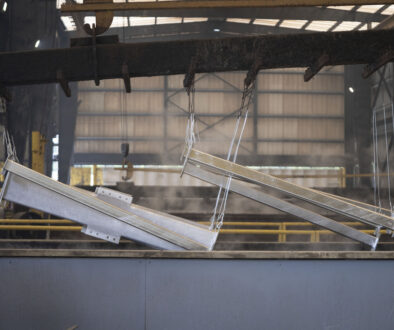
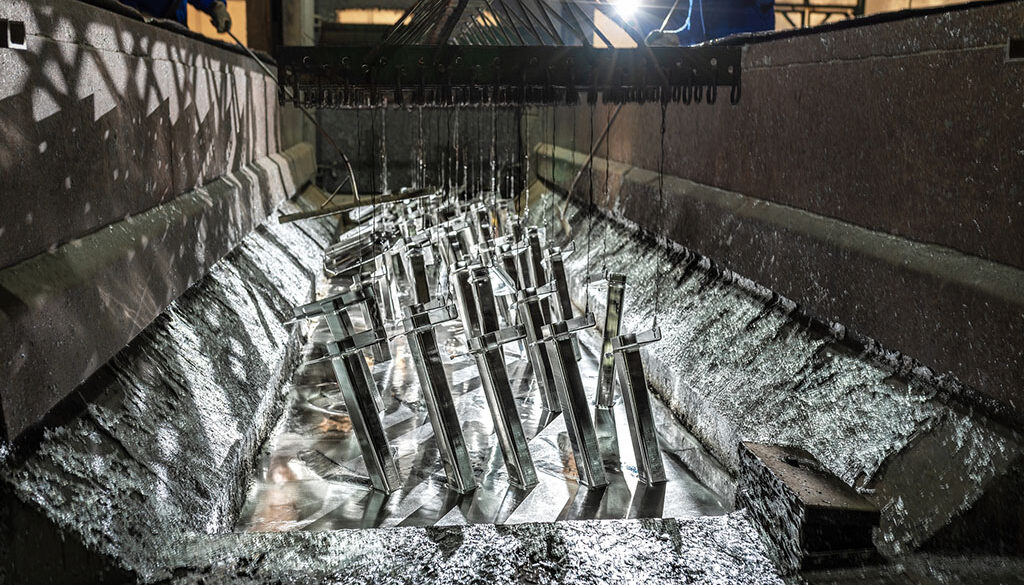
When it comes to long-lasting corrosion protection, nothing beats the power of galvanizing. It’s critical for everything from buildings to DOT projects, and its reliability has made it the “go-to” to help structures remain rust-free. Hot-dip galvanizing involves immersing steel in a molten zinc bath, providing a protective, sacrificial layer to safeguard the metal below.
However, passivation of galvanized steel should always be considered as well. Immediately after galvanizing, this zinc coating may be vulnerable, making passivation absolutely necessary. Passivation enables zinc to have the time it needs to naturally develop its long-lasting protection.
At South Atlantic, we have helped national brands achieve the reliability that can only be found in hot-dip galvanized materials. In addition, because we meet or exceed ASTM standards, you don’t have to worry about our quality. Want to learn more? We invite you to contact us for a no-hassle quote today.
In this article, we’ll take a closer look at passivation, the science behind it, and what it means for protecting your project.
What Is Passivation?
Passivation is a chemical post-treatment that is applied to the steel immediately after it’s hot-dip galvanized (HDG). The goal is to minimize the high reactivity of the new zinc coating.
But to fully understand the power and necessity of passivation of galvanized steel, it’s critical to comprehend the basic science behind galvanizing.
Remember that zinc plays a sacrificial role in protecting the material beneath. The zinc will corrode instead of the steel beneath it. This is called cathodic protection.
Barrier protection is another way that zinc provides rust protection. The zinc literally provides a shield, preventing moisture and oxygen from penetrating and potentially damaging the material beneath.
However, there is yet another layer of protection provided by a zinc carbonate patina, and this layer doesn’t form immediately. It develops through the natural weathering process. Because it takes time to form, the zinc can be vulnerable.
How Passivation of Galvanized Steel Provides Protection
Passivation provides a temporary shield, usually in the form of a chemical like a chromate or phosphate compound. It also helps prevent wet storage stains, which are also referred to as “white rust.”
Wet storage stains are more than merely unsightly; they represent a potential compromise in the barrier protection, reducing the longevity of HDG projects.
Why Is the Passivation Process Important?
When working with fresh zinc, it’s vital to keep moisture away from it because, in its early stages, it is still highly reactive. It’s typically most vulnerable during the first six weeks after galvanizing.
Here’s a brief, very basic rundown of the chemistry:
When zinc reacts with water, it forms zinc hydroxide. This is problematic because the fresh zinc needs access to carbon dioxide to stabilize. When zinc hydroxide forms instead, you get a wet storage stain.
Passivation creates a thin barrier to keep moisture away, preventing it from interfering with zinc’s natural process.
How Effective Are Passivation Coatings?
First, remember that passivation coatings are not permanent coatings. Passivation agents temporarily last around six weeks before they are consumed. At that point, the HDG steel weathers, and the zinc surface is more stable now that it has been freed from the threat of moisture. This opens the door for the natural weathering that creates the zinc patina.
Of course, there are several factors that influence the performance of passivation coating. These include:
- Storage conditions
- Humidity
- Temperature
- Transporting
When Should You Avoid Passivation?
This should be decided on a case-by-case basis. Understanding when to use or when not to use passivation can have an impact on your end product. If you’re not sure, we encourage you to speak to us. As expert galvanizers, we have the answers you need to relieve you of worry or stress.
The main exception for passivation is duplex coating systems.
This occurs when galvanized steel has been painted or powder coated. This is because passivation agents can interfere with the adhesion of paint and powder coating.
Other times when passivation has no immediate value include:
- Controlled storage environments
- Projects where duplex systems are planned from the beginning
- Parts going into immediate service
South Atlantic Galvanizing Can Protect Your Project…And Your Reputation
You have too much at stake. It’s far too easy for things to fall between the cracks. Unfortunately, when you’re fighting corrosion, one mistake can spell disaster for your project and damage your reputation. That’s why you need to work with an experienced, reputable partner that truly understands the subtleties and importance of galvanizing.
South Atlantic Galvanizing has been the Southeast’s most trusted corrosion protection provider for over 50 years, and our record speaks for itself.
Worried about cost surprises? We offer fixed estimates with no hidden surcharges. With ten strategically placed facilities across the Southeast, you can rest assured we can meet your schedule and your deadlines.
Ready to experience the many ways we have you covered? Contact us for a quote.
Key Takeaways
- Hot-dip galvanizing protects steel by immersing it in molten zinc, which acts as a sacrificial and barrier layer against corrosion.
- Passivation is a chemical post-treatment applied immediately after galvanizing to protect the new zinc coating during its most vulnerable period.
- Fresh zinc is most at risk in the first six weeks after galvanizing, when moisture exposure can cause wet storage stains (“white rust”) instead of the desired zinc carbonate patina.
- Passivation coatings are temporary, lasting approximately six weeks before the zinc naturally stabilizes through weathering.
- Passivation should be avoided in duplex coating systems (painted or powder-coated steel), as it can interfere with adhesion.
- South Atlantic Galvanizing offers fixed-cost estimates, meets or exceeds ASTM standards, and operates ten facilities across the Southeast.
=====
Sources:
American Galvanizers Association, “Passivation,” https://galvanizeit.org/specification-and-inspection/post-hdg-considerations/passivation
American Galvanizers Association, “Storage,” https://galvanizeit.org/specification-and-inspection/post-hdg-considerations/storage